October 30, 2026 · 3 min read
To Vote or Not to Vote. That is the question...
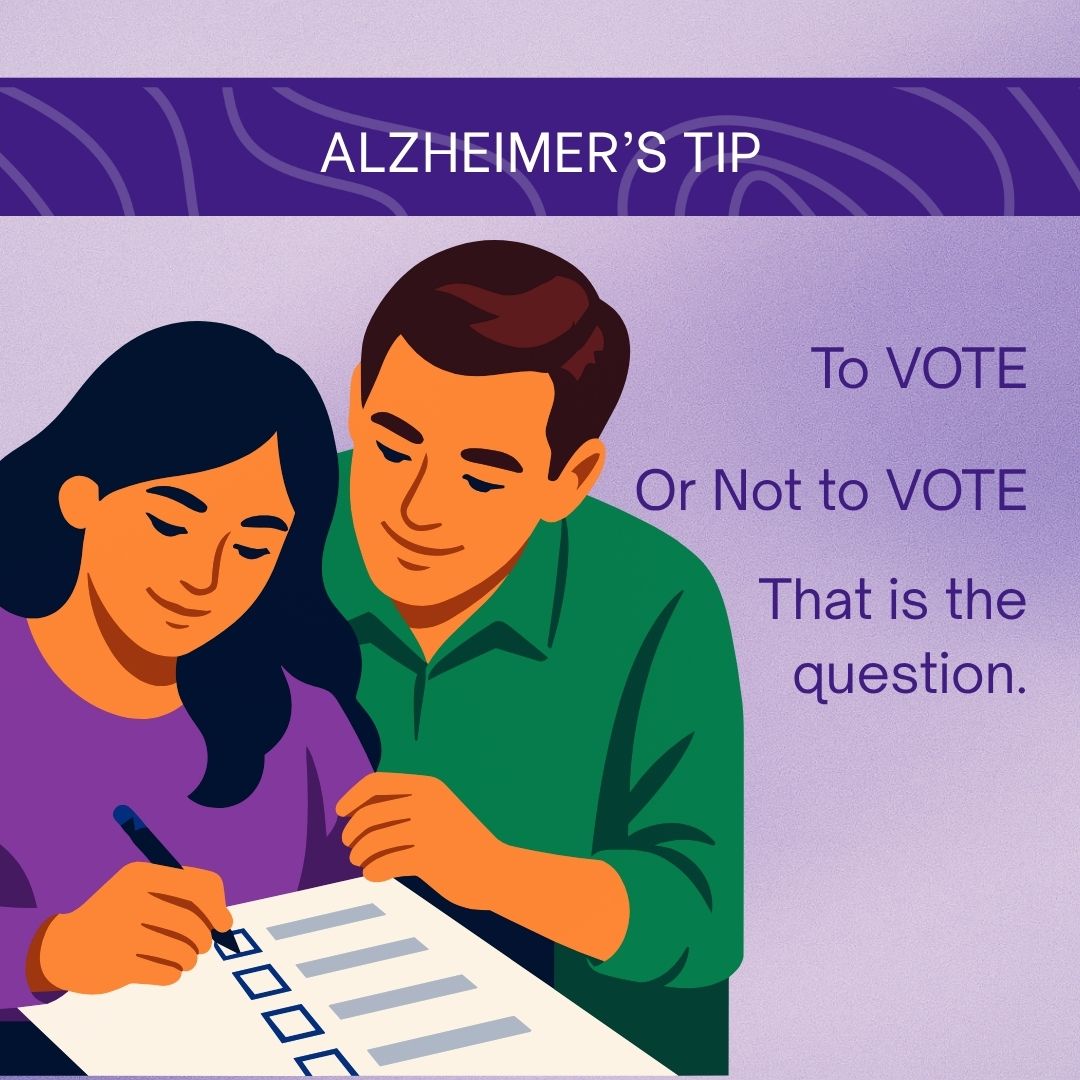
Should our loved ones with dementia vote?
Definitely not an easy question to answer. Voting is an important layer of dignity caregivers can offer their loved ones, so it's important to determine if they care still capable of voting. Besides, those with dementia have the legal right to vote.
But the question of “should they vote” goes beyond the legality.
Websites I perused used the word Competency, but I prefer the words Awareness and Comprehension when making that decision.
Two years ago, Marv and I went to vote together for the presidential election. At the time I felt he knew enough about the candidates—was aware enough—to make a competent decision. I also knew that the process wouldn’t be easy. I learned it was worse than “not easy.”
After standing in line for two hours, we finally received our ballots and went to sit. I knew I’d have to assist—friends, family, neighbors, etc. may assist in the voting booth, but are not allowed to influence the vote. We sat side by side, so I could monitor his progress and be there if he had questions. The first thing he did was fill in two circles in the President slot. Then I knew we were in trouble. We were able to retrieve a new ballot fairly quickly—the election judges were very understanding!—and this time we sat in the farthest corner possible, so we wouldn't disturb other voters. Rather than giving him his ballot, I read off the candidates’ names, often had to repeat several times, and he told me his choice. I learned then, though, that he already lacked comprehension of not only Who he was voting for, but What he was voting for.
This year will be the first year he will not vote. He isn’t aware of who I am to him, much less who a governor, senate, judge or other candidate might be. He doesn't comprehend when I tell him to sit down, much less whether a ballot position should receive a Yes or No.
But the decision of of whether or not they should vote isn’t always that easy.
As a caregiver, if you’re struggling to decide if they should vote, here are a few thoughts to help:
Does your loved one want to vote? If I asked Marv if he wanted to vote, his answer would definitely be Yes, so this alone is not a decision-maker.
How have they performed on the mini cognitive tests such as the Mini-Mental State Examination (MMSE) or the Montreal Cognitive Assessment (MoCA). A lower score does not eliminate the possibility of them voting, but it can be an indicator.
Watch the news together: Can they engage with you regarding current events? Do they express an opinion regarding issues or candidates?
Print out a sample ballot and go through it at home. Does your loved one understand the position they’re voting for? Are they able to express a clear choice for a candidate or a ballot measure? (Reminder, an assister may not influence the vote.)
Given clear information, does your loved one comprehend the choice?
Does the process make them agitated?
Would a mail-in ballot work better than in-person voting?
The bottom line is, you know your loved one better than anyone else. It's not an easy decision to make, just as many of the decisions a caregiver is faced with. Just remember, as always, you are not alone on this journey!
With warmth, Brenda